EVOLVING APEROL’S FESTIVAL PRESENCE AT SZIGET
After creating Aperol Spritz’s first brand experience at Sziget Festival in 2025, we returned to Budapest in 2026 to develop the complete area for its second edition.
The starting point was different this time. Rather than designing everything from scratch, we had a full festival season of real-world experience to work with. We knew which elements had performed well, where the space could be improved and which parts of the original concept were worth keeping.
Our task was to take that foundation and develop it further. We redesigned the complete area, refined key architectural elements, introduced new details and activations, and integrated existing Aperol tools from several European markets into one coherent spatial concept.
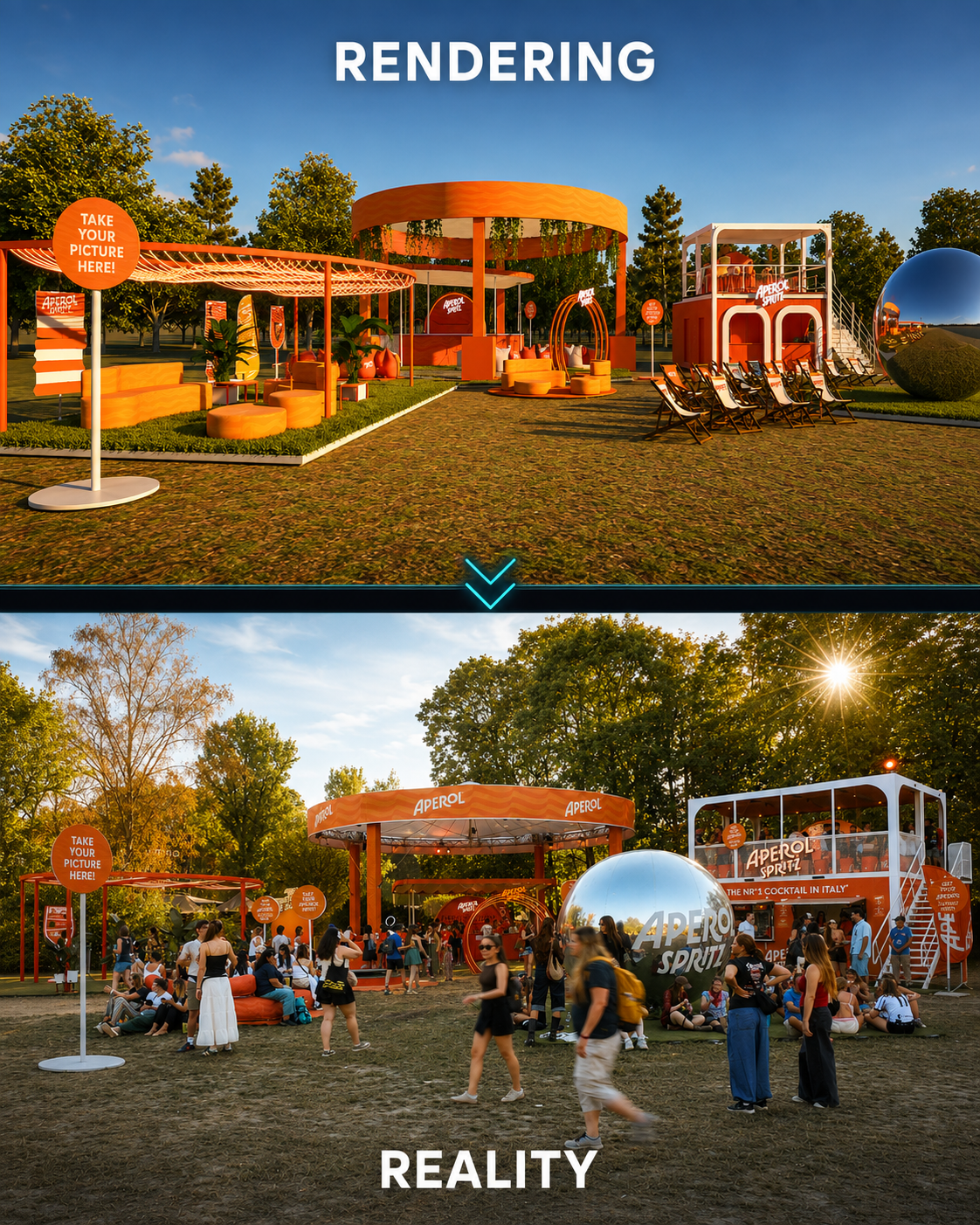
As lead agency, our responsibility extended from the first renderings through planning, international logistics and construction to on-site operations during the festival and the complete breakdown afterwards.
KEEP WHAT WORKS, DEVELOP WHAT CAN BE BETTER
Several elements from the 2025 area had already proven themselves under real festival conditions.
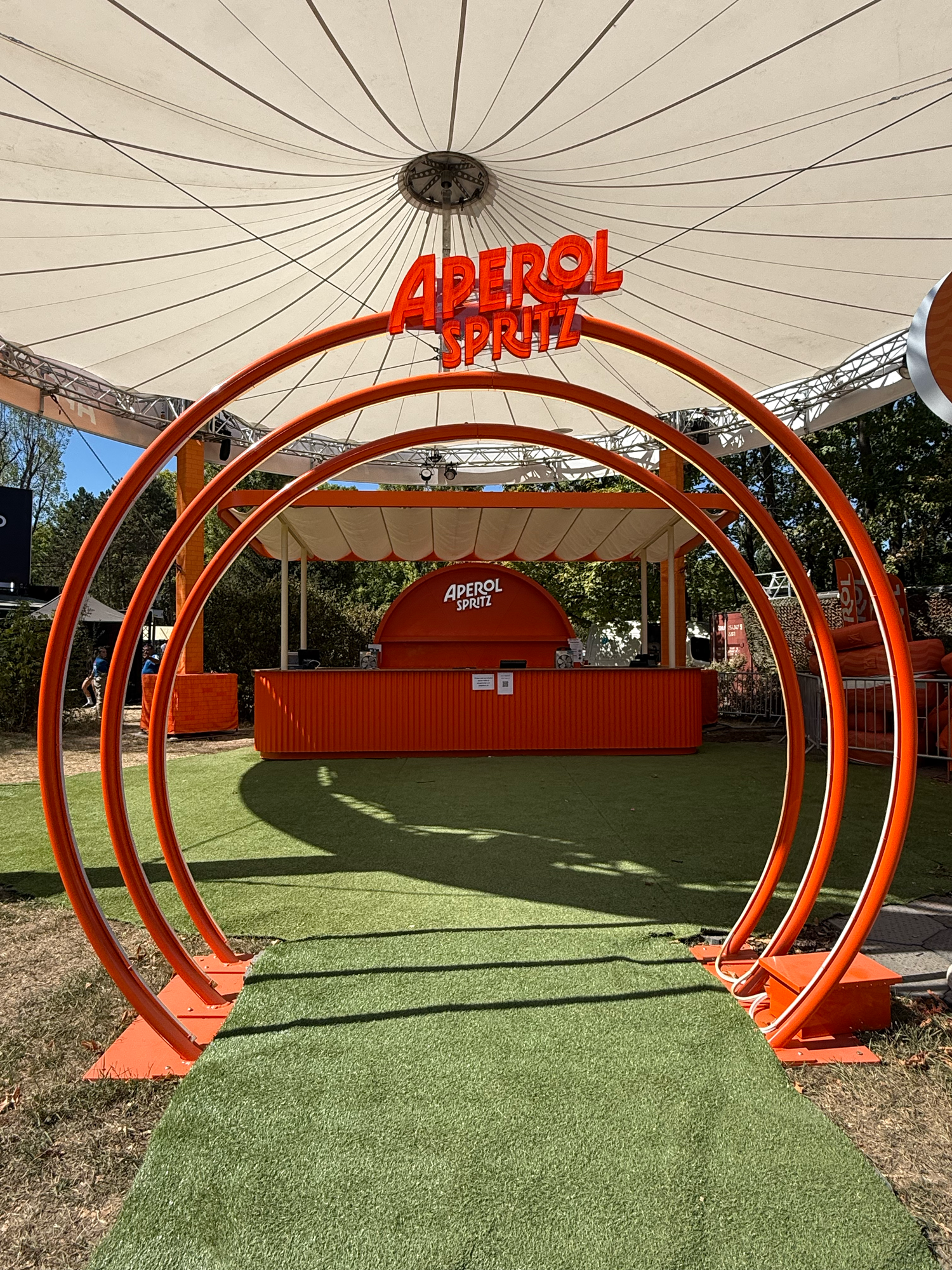
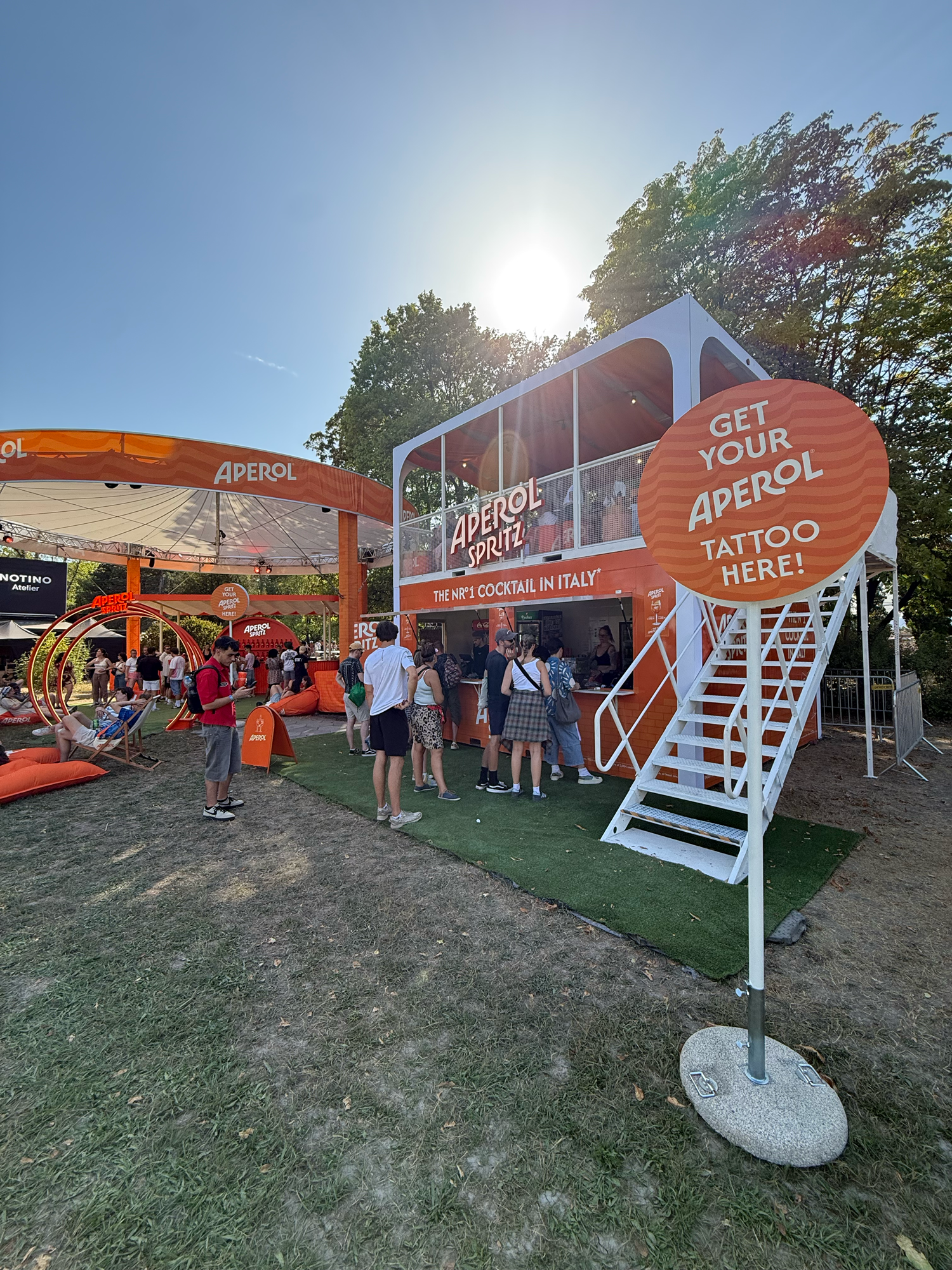
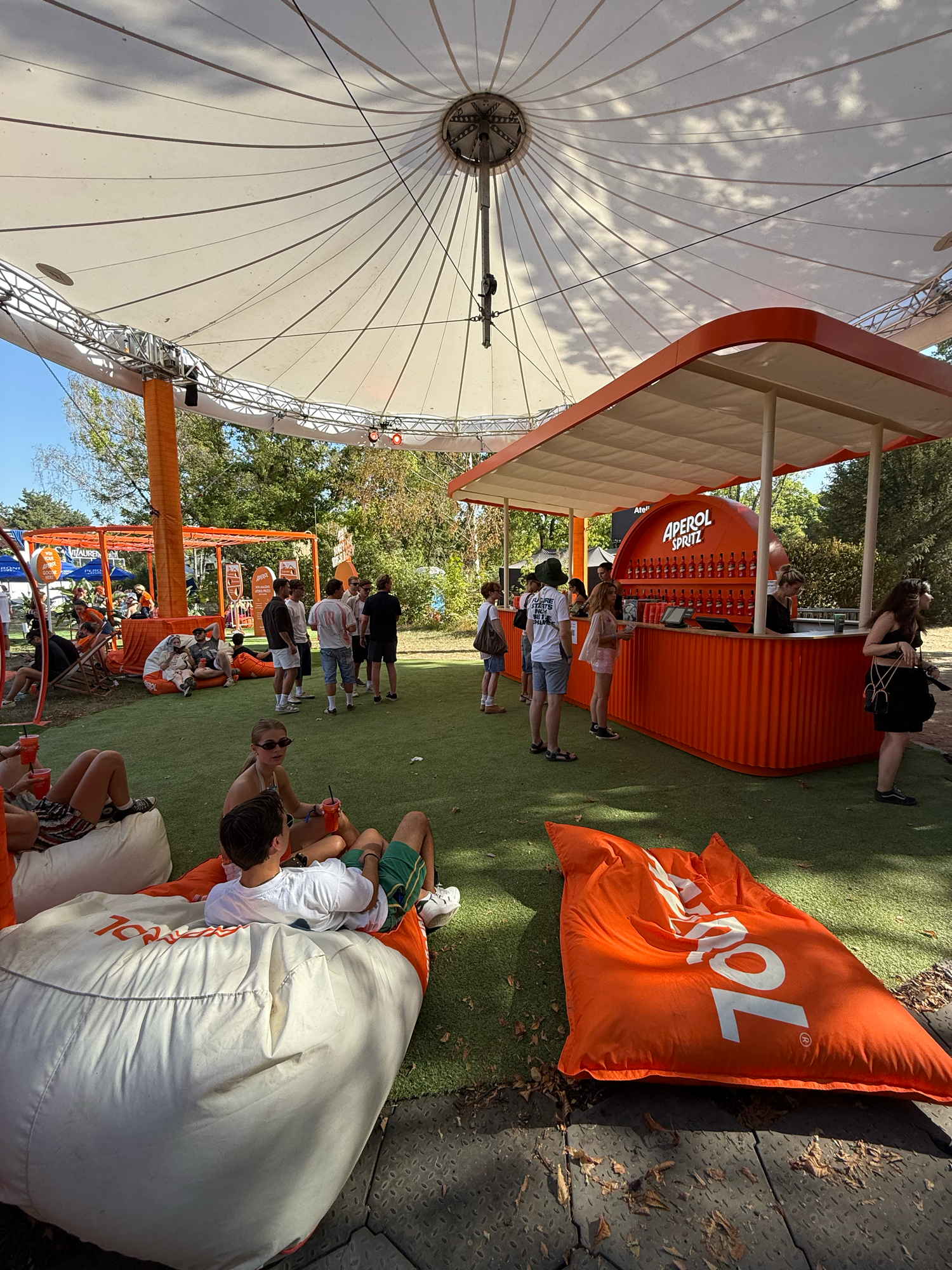
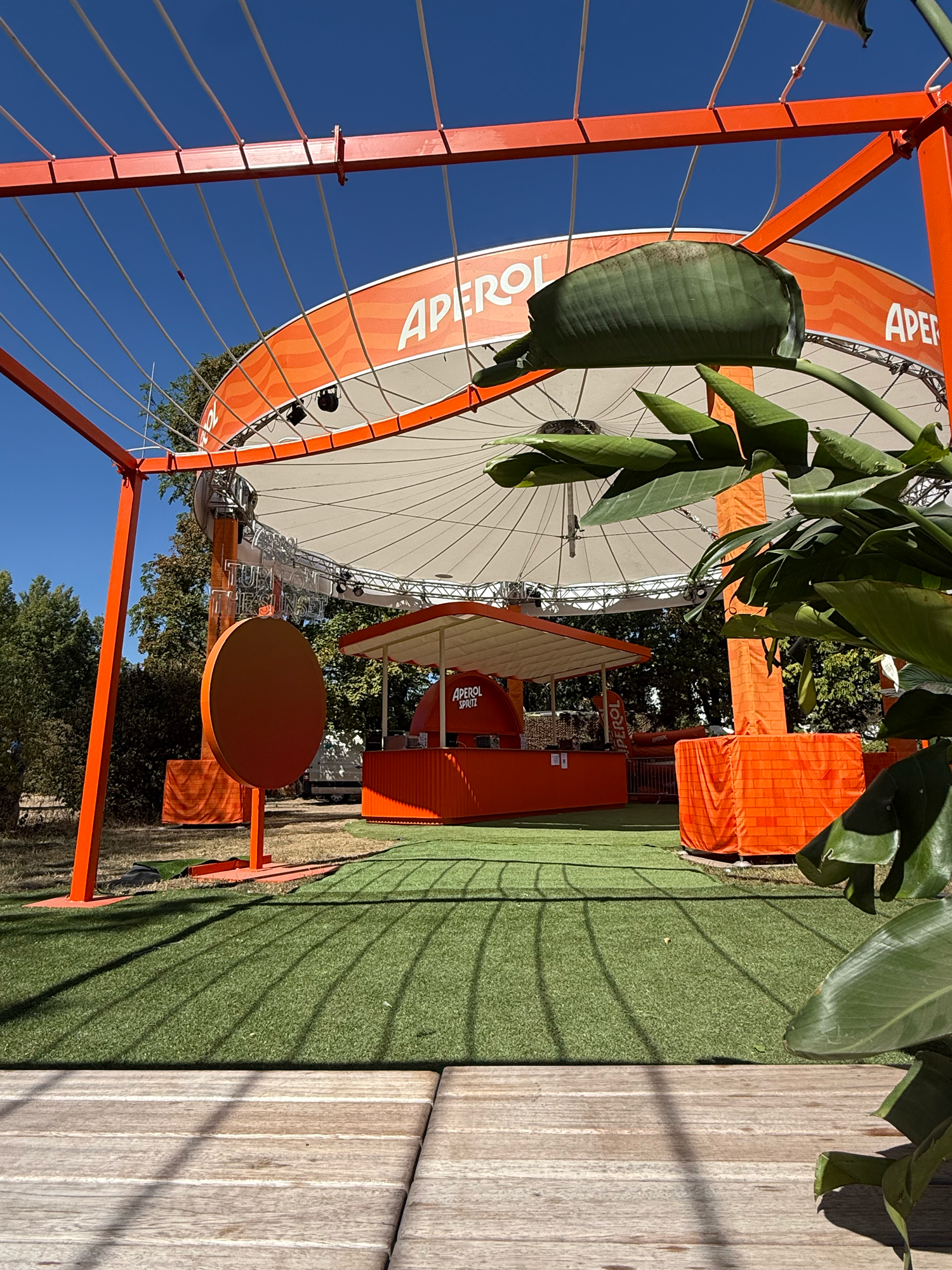
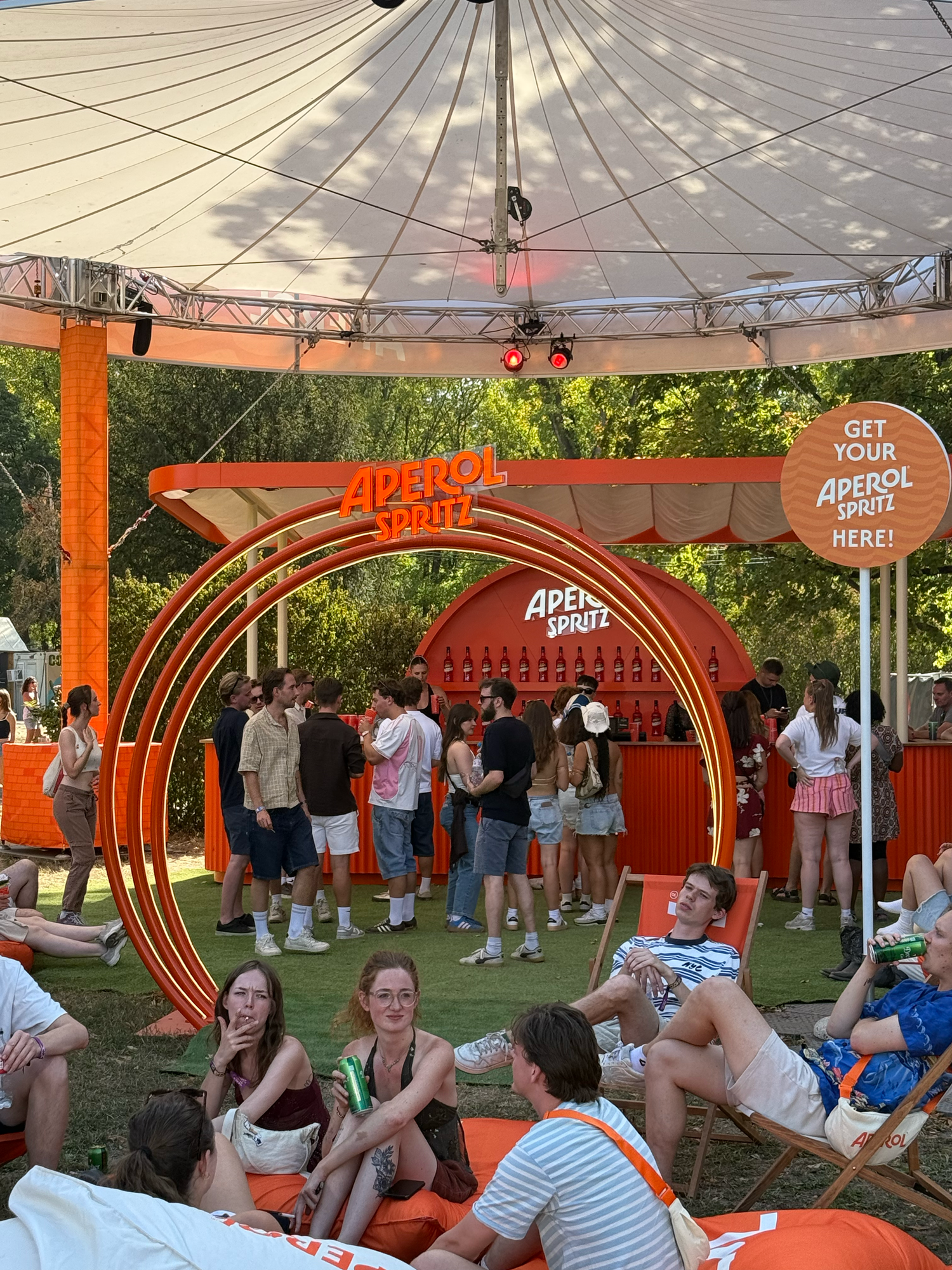
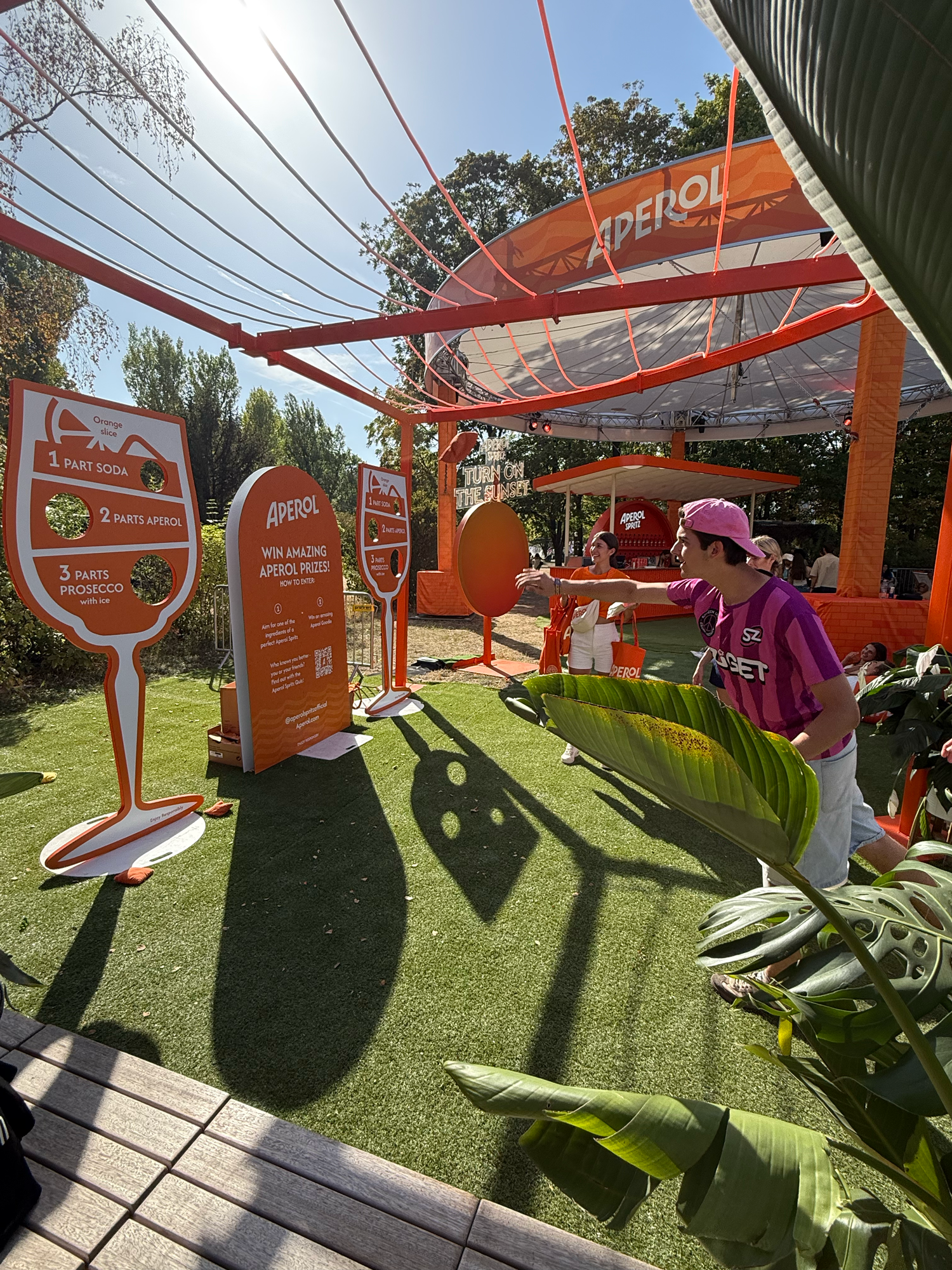
The custom entrance arch returned as a clear marker for the Aperol area, alongside the large branded skyliner providing shade and rain protection. The container bar with its rooftop VIP terrace remained at the centre of the setup, and the XL glass ball game returned as one of the interactive elements within the space.
Instead of replacing these structures, we worked around them and developed the overall environment further.
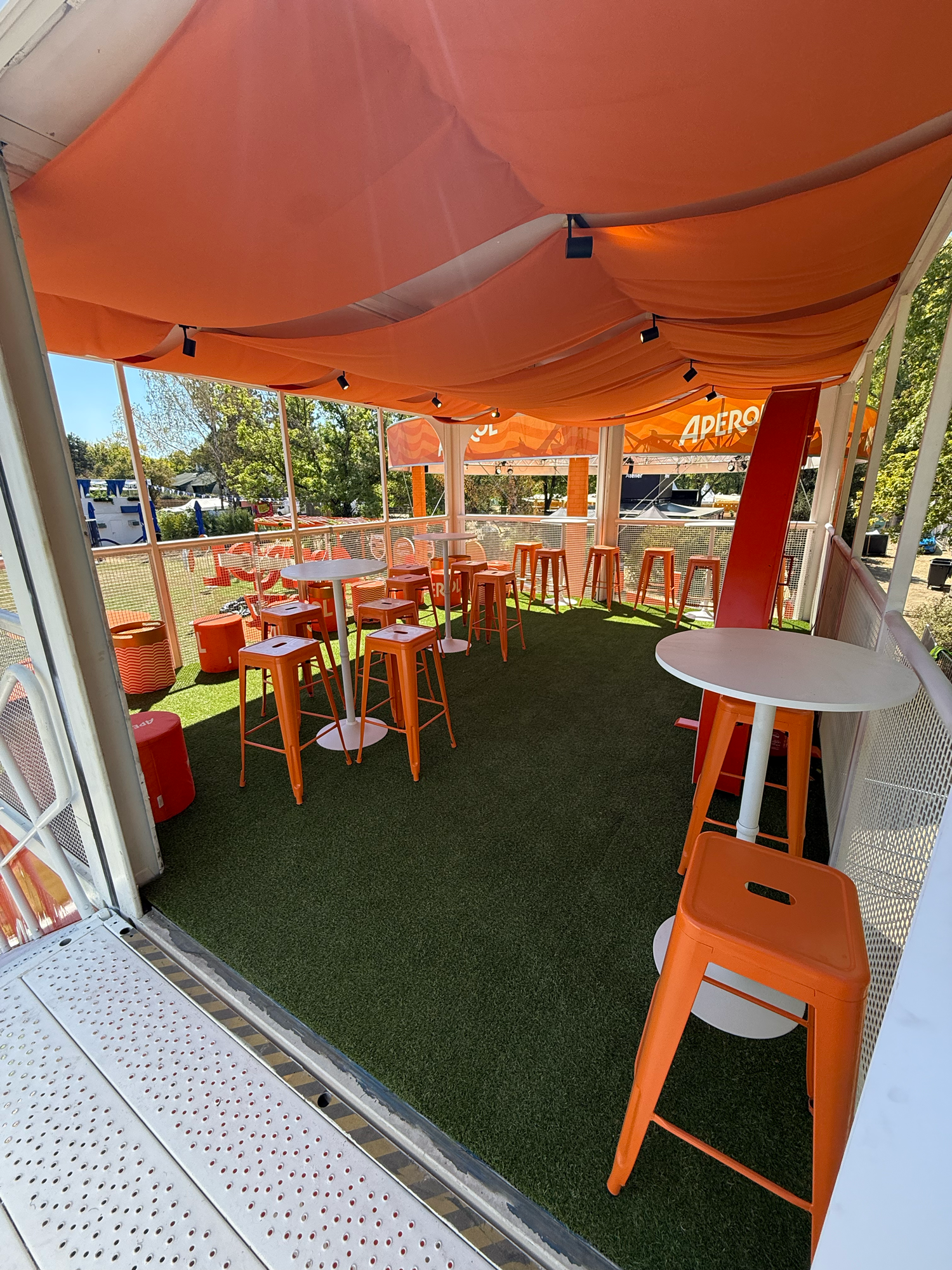
The container bar received a new architectural treatment with additional arches, giving the existing structure a more considered appearance and connecting it more closely to the wider Aperol design language. The VIP terrace above was also reworked to create a more comfortable and cohesive setting.
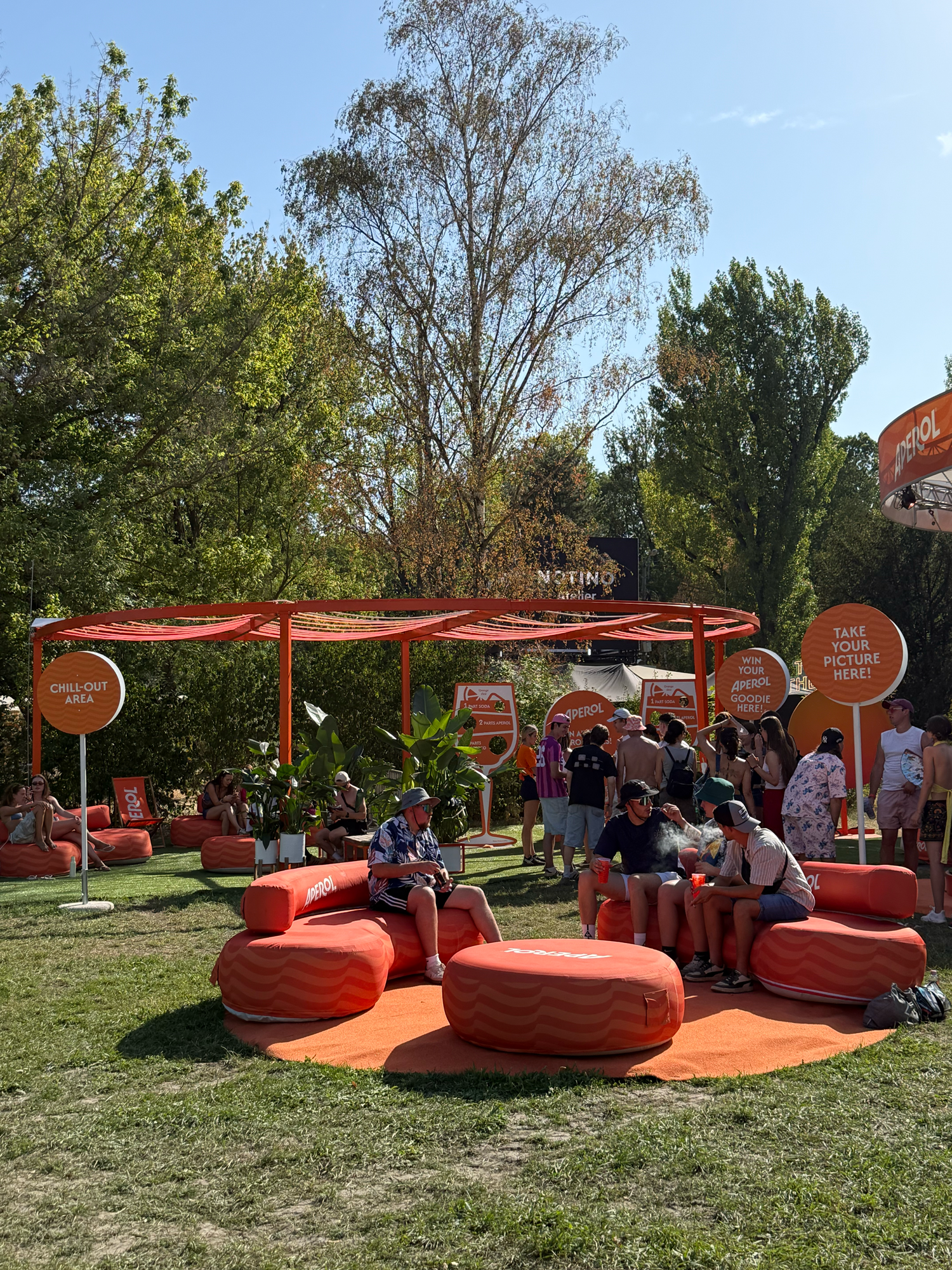
Across the area, we introduced planting, new details and different coloured grass surfaces to define individual zones and give the large festival space more structure. Our own modular seating cubes were integrated throughout the concept, adding flexible seating that could be arranged around the changing requirements of the site.
The objective was not to make the area busier. It was to make the individual elements feel more connected and the complete space more resolved.
ADDING A NEW INTERACTIVE ELEMENT
For the 2026 edition, we also introduced an Aperol airbrush tattoo activation.
Festival visitors could choose Aperol-branded temporary designs and add them directly to their festival look. It created a simple, personal interaction with the brand that worked naturally within the setting and added another layer to the experience without requiring a large additional structure.
Together with the returning XL glass ball game, it gave visitors different ways to engage with the Aperol area beyond the bars and seating spaces.
ONE DESIGN, TOOLS FROM THREE COUNTRIES
Creating the spatial concept was only the first part of the project.
The finished area brought together event tools and equipment from several markets. Existing Aperol elements travelled to Budapest from Italy and Germany, while seating, inflatables, structures, equipment and additional tools were transported from Austria.
Months of preparation went into coordinating how these individual components would come together on one festival site in Hungary.
Transport, deliveries, construction requirements and installation all had to be coordinated across different suppliers and teams. Our role included organising the international logistics and managing the build with local and foreign partners, together with our own revolvers team.
On site, this meant coordinating trucks, forklifts, equipment, crews and the different stages of construction while keeping the complete area aligned with the design that had been developed in the months before.
What appears as one finished Aperol space once the festival opens is the result of many separate elements arriving from different places and being assembled into one system.
FROM RENDERING TO FESTIVAL OPERATION
Our involvement did not end once construction was complete.
As lead agency, we remained responsible for the area throughout Sziget, coordinating the operational requirements around the setup and making sure the different elements continued to function as intended during the festival.
Once Sziget ended, the process reversed. The complete area had to be dismantled, the individual brand tools separated and prepared for their next destination, and the equipment transported away from the site.
Build-up, operation and breakdown were therefore considered as part of the project from the beginning rather than as separate production stages.
For a temporary brand environment of this scale, a design has to do more than work in a rendering. It needs to work through transport, installation, several days of intensive festival use and dismantling at the end.
A SECOND EDITION BUILT ON EXPERIENCE
The 2026 Aperol area at Sziget was not about replacing a successful first edition with something completely new.
It was about using what we had learned on site.
We retained the structures and ideas that had already proven themselves, redesigned the areas where we saw more potential and introduced new elements where they added to the overall experience.
The result was a more developed version of the Aperol presence at Sziget, with the creative concept, spatial design, international production and on-site execution planned as one connected project.
Photos: ©️ revolvers creative GmbH, @friends